Giornale Degli Orologi
Menu
Menu

Tag: bulova

  • Bulova Lunar Pilot goes pop!

    Bulova Lunar Pilot goes pop!

    I have always thought that the Bulova Lunar Pilot is one of the most serious-looking watches around. Its functional aesthetic, unchanged since the days of NASA’s lunar missions in the 1970s, is matched by the reliable, robust, precise high-frequency quartz movement inside. In short, it is the prototype ‘tool watch’, retaining the charm of having landed on the Moon on the wrists of astronauts over 50 years ago.

    However, in recent years, the Lunar Pilot has begun experimenting with different colours and materials. We have seen the dial change from black to red or ‘blue panda’, and it has been covered in meteorite. The case has grown from the original 43.3 mm to a more masculine 45 mm and back again. Today, the watch is finally taking itself less seriously.

    Budii, the new friend of the Lunar Pilot

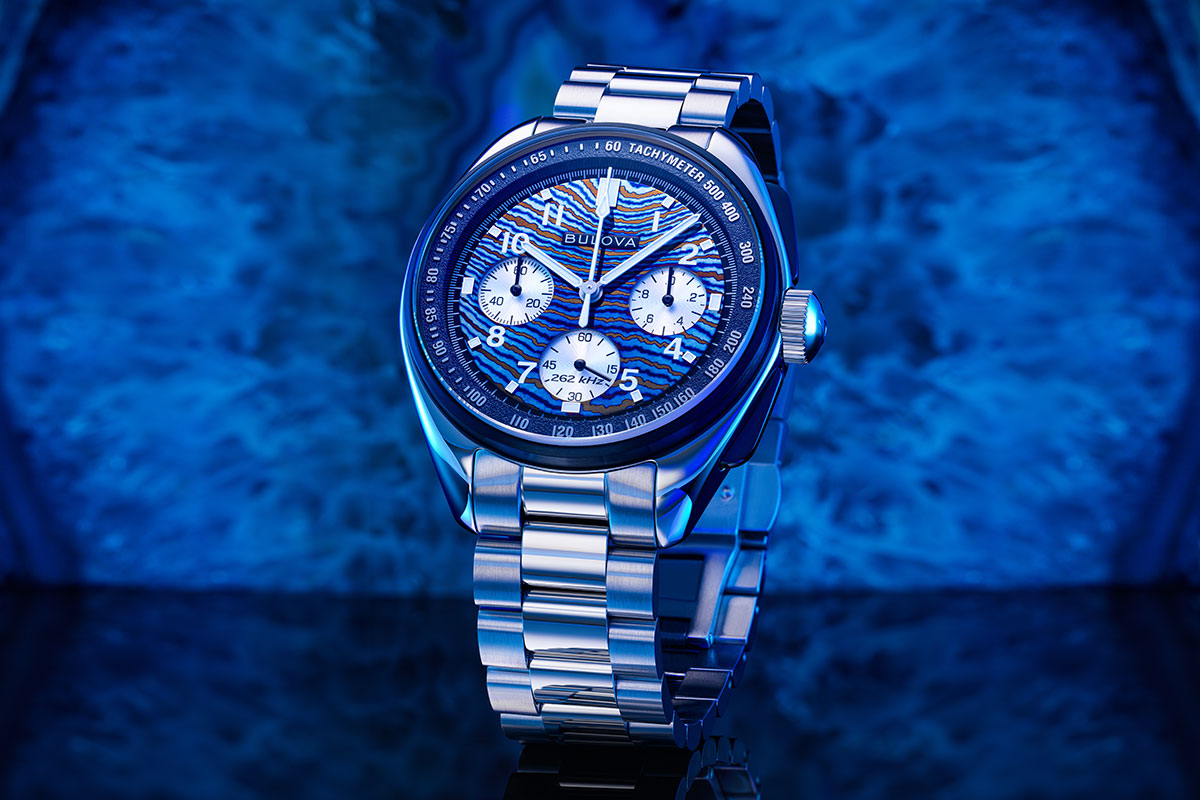
    How? Thanks to one of those operations that they call a ‘collab’ in watchmaking, an Americanism which I find obnoxious but which is unfortunately also popular. (Obviously, this stands for ‘collaboration’. Is it too much effort to say ‘collaboration’? Idiocy reigns supreme, editor’s note). In this case, it’s with the Brazilian artist Thiago Rosinhole, who is well-known among Pop Art enthusiasts for his famous Budii character. Budii is a mouse-like character originally made from a combination of resin and fibreglass, hand-painted with a mixture of acrylic spray paint and professional markers. For this project, the artist has transformed Budii into an astronaut and associated him with the Bulova Lunar Pilot, providing his own personal interpretation through his work on the dial.

    Thiago Rosinhole’s involvement in this project was no coincidence. As well as lending his work to international brands to customise their products, the São Paulo native is one of the Bulovers. In short, he is a fan of the brand and was eager to contribute his art to such a symbol as the Lunar Pilot.

    I won’t recount the history of the Lunar Pilot here, as you can find a comprehensive summary in this well-documented article. Of particular interest is the personal artistic touch that Thiago Rosinhole has brought to the watch and the unique, almost alchemical technique he has used to create the one-of-a-kind dial.

    Timascus: a mysterious name

    In every sense of the word, as the technique adopted by the artist and the material used ensure that each dial is unique. The material is called Timascus or Timasco. Although the name is reminiscent of Damascus steel – a generic term for steel alloys with welds that form different patterns – Timascus is a registered trademark. It is essentially a titanium version of Damascus steel, with different titanium alloys mixed together to form an ornamental pattern.

    The term ‘Timascus’ is a combination of ‘titanium’ and ‘Damascus’, and it is not entirely new to watchmaking (some lesser-known brands have used it for the case). In fact, it has been around for at least four or five years, although it is not widely used. This innovative material was initially created by three American metalworkers: Tom Ferry, Bill Cottrell and Chuck Bybee.

    Like Damascus steel, Timascus consists of two or more alloys that are rolled and welded together to create decorative patterns. Timascus uses either commercially pure titanium or Grade 5 titanium. While patterns in Damascus steel are typically brought out using acid etching, Timascus patterns are more commonly revealed using heat or anodisation. Heat colouring appears to produce greater colour contrast in the official Timascus alloy blend than anodising does. Polished finishes produce the brightest colours, while satin finishes can create a more visually striking effect.

    The new livery of the Lunar Pilot

    Thiago Rosinhole’s craftsmanship with the Timascus gives the dial a polychrome grain ranging from azure to blue and from burgundy to lilac. The result is an irregular, non-geometric pattern that creates an effect reminiscent of marble or damask. This is why no two dials are alike and each Bulova Lunar Pilot is unique.

    The artist bends, melts and forges the titanium alloy using heat and pressure. This process creates contrasting designs, lines and colours fused into fascinating shapes, thanks to the alloy’s various components having different levels of oxidation resistance. The result is a dial characterised by futuristic effects and colour combinations.

    For a historic brand like Bulova, this is certainly a bold choice, especially since it has been applied to one of its most famous, traditionally styled collections. In short, this is a Lunar Pilot for true Bulova fans who are willing to embrace a departure from tradition for the sake of art. Thiago Rosinhole has signed not only the dial, but also the historic case back.

    Further details can be found in the captions. Finally, it is at the upper end of Bulova’s price scale: €1,550. This number commemorates the 150th anniversary that the brand will celebrate in 2025, albeit quietly, and the price is justified by the fact that it is a limited edition: only 5,500 pieces will be produced worldwide, with 300 reserved for Italy.
    What can I say? Bulova fans and art lovers, get ready!
  • Mil-Ships: Bulova, the history and charm of bronze

    Mil-Ships: Bulova, the history and charm of bronze

    One of the most exciting trends among watch enthusiasts is collecting timepieces designed to military specifications for use by soldiers and elite units. Bulova’s Mil-Ships collection belongs to this exclusive and highly prized category. Having originally launched the collection in 2021, the company is now relaunching it in two new versions to celebrate its 150th anniversary. It is also a gift for the aforementioned watch enthusiasts, who will appreciate the updated, enriched reference showcasing a history dating back almost 70 years. This is a history that dates back to another era, yet one that still fascinates us today.

    It all began in the 1950s − or perhaps even earlier

    This is a true story, unlike the many myths surrounding watches. It can be placed in a specific period and is certified by dates and archives, so it is true. In 1955, the United States Navy’s Bureau of Ships issued a tender for a watch to be used by divers working with underwater explosives. Founded in 1940, the Bureau of Ships was primarily responsible for designing, constructing, and maintaining ships, as well as ensuring their stability and seaworthiness.

    Alongside the obvious requirement for water resistance, the specifications included luminous hour markers and a rotating bezel. These specifications were identified by the code MIL-W-22176 (SHIPS), after which our Mil-Ships is named. As the US military was legally required to purchase supplies from domestic manufacturers, the options were rather limited. Bulova was an obvious choice as it was based in New York at the time and had been a cornerstone of American watchmaking for decades. In addition, the US Navy commissioned a MIL-SHIPS-W-2181 Submersible that was never marketed. This occurred when the elite EOD (Explosive Ordnance Disposal) and UDT (Underwater Demolition Teams) teams required highly specialised equipment to support their missions during World War II.

    There are Mil-Ships and Mil-Ships

    The Navy determined that the characteristics of the MIL-SHIPS-W-2181 were suitable for the mission type. Under the guidance of retired General Omar Bradley — one of the most skilled figures of World War II — Bulova created a series of prototypes that were rigorously tested by the Navy Experimental Diving Unit (NEDU) in 1957. Despite their excellent performance in diving and depth tests, however, Bulova decided not to proceed with production in 1958, leaving only 12 prototypes.

    The other participant, an importer named Allen Tornek who sold Blancpain watches, had withdrawn from the tender a year earlier. Realising that the Fifty Fathoms was already a reliable diver’s watch, Tornek combined his surname with an anagram of ‘Villeret’, where Blancpain was based, to create a brand called Tornek-Rayville. He added the initials ‘U.S.’ to the watch face to make these reworked Blancpain timepieces appear more American.

    At this point, the story becomes rather hazy. However, today Bulova emerges from the fog with an updated version of its Mil-Ships, which generated a lot of interest when it was released four years ago. In my opinion, the updates make this watch more interesting than the 2021 version.

    The 2025 Mil-Ships

    As always, I will leave most of the technical information to the captions. What I want to highlight here is the work done on the case, which is essentially expressed in two details: the use of bronze and the size of the lugs.

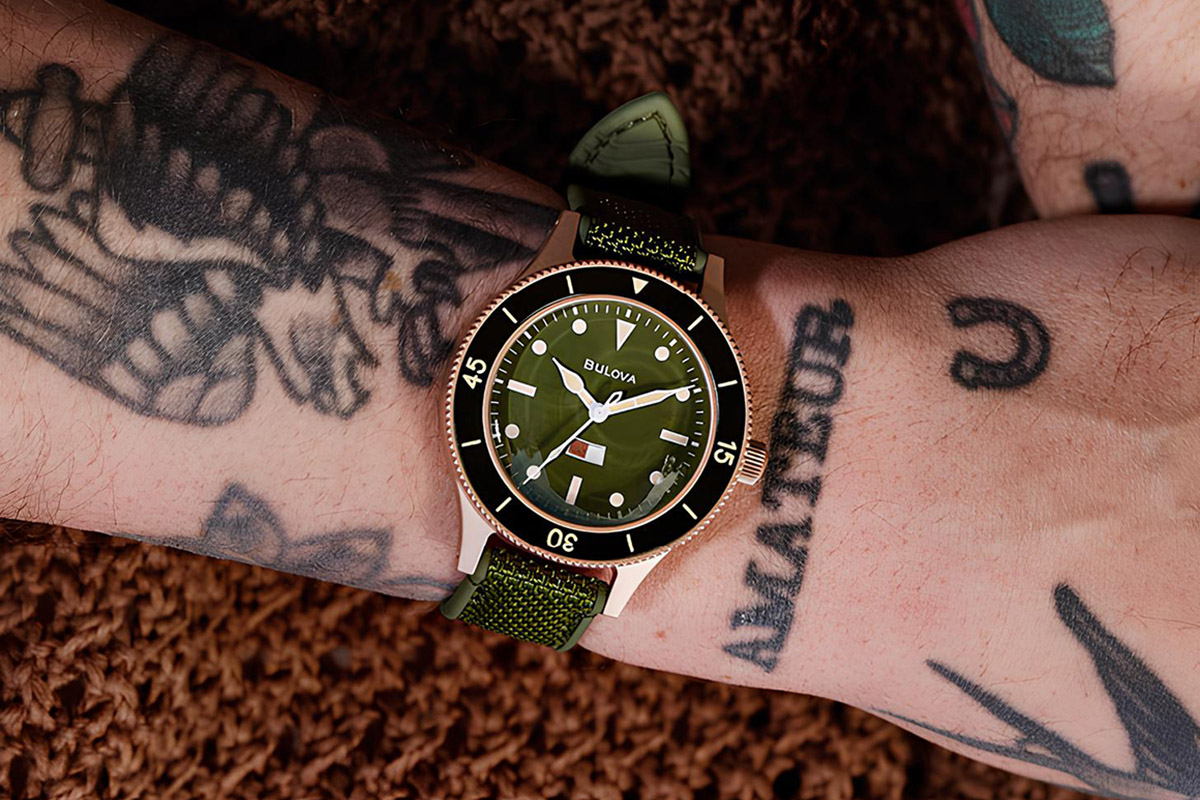
    Bronze is a simple enough concept. If the 2021 Mil-Ships was intended to be a very faithful reissue of the 1956 model, it was only natural to choose an stainless steel case. Bronze, however, is the ultimate marine and nautical material, making it perfect for a collection like this with an undeniable subaquatic heritage. Add to that the well-known tendency of bronze to develop an original patina over time and with exposure to air, light, water and sweat, and you have another treat for nerds hunting for uniqueness in every watch.

    However, there is more to say about the lugs. In the previous version, they were 16 mm wide. Combined with the 41 mm diameter and 15 mm thickness of the case, this gave the Mil-Ships a slightly ‘macrocephalic’ appearance, bordering on the ungainly. Although the intention was to preserve the original dimensions of the 1950s prototypes, this appearance was not to everyone’s taste. The width has increased to 18 mm in the new version. It’s not a significant change, but those extra 2 mm make a big difference. Having tried the watch on my wrist, I can confirm that the change from 16 to 18 mm benefits the Mil-Ships both visually and in terms of wearability, making the new look much more balanced. Well done to Bulova for listening to feedback from enthusiasts.

    The price is reasonable, too

    We’ll see if people appreciate the fact that the brand has deviated from the original in terms of both the case material and the colour. It’s no longer black, but a contemporary shade of blue this time, complemented by a forest green version. The design is modern yet still in line with the watch’s military heritage. Personally, I think the blue one looks better when worn. But then, de gustibus… In any case, the choice of colour does not affect the price; both models cost €890.

    Bulova is thus celebrating its 150th anniversary with one of the most distinctive models in its history, linked to its rich tradition of military watches. This commemorative edition blends artisanal and historical elements from the military world with modern technology in an intelligent and harmonious way. Even today, the Mil-Ships collection, created in honour of its original purpose, is synonymous with precision, durability, and innovation. These are the qualities that have defined the brand for over a century and a half. And all at a more than affordable price. These days, this can mean the difference between entering a shop and making a purchase or sadly and frustratedly passing by, glancing at the price tags in the window (if there are any…).